
Waste collection has been a critical factor in ensuring business cleanliness since time immemorial. However, the manner through which the process has been conducted has remained static for a number of years. This was because waste collection used scheduled intervals and set routes and business people had to wait for their scheduled days. As much as this was an efficient method of collecting waste, it did not have to be the case all along.
With the advent of artificial intelligence (AI) and data, waste collection firms are now in a position to make sound judgments. This is because they will no longer depend on schedule alone, but will also use real data that will inform them about the frequency of waste collection and the efficiency of the process.
Why Traditional Waste Collection Is No Longer Enough
The experience of many businesses is the same. It happens that a bin gets collected even though it is not completely full, whereas sometimes it overflows before the regular collection service comes.
The former causes wastage of fuel and money, and the latter causes difficulties of various nature – from unpleasant working environment to attracting pests and posing a threat to the health of workers and visitors of the business premises.
It should also be noted that rigid fixed schedules cannot take into account the realities of business operations. The restaurant may generate more waste during certain periods (holidays), whereas the office may generate less waste because of people working at home. Such fluctuations may occur at construction sites, shopping centers, warehouses.
The need for flexibility in waste collection services is dictated by the changing demands of the businesses and growing urbanization. At the same time, there are increased requirements to the efforts of business organizations in order to minimize the negative effect on the environment.
Therefore, many waste management companies are seeking alternative solutions to traditional weekly schedules of waste collection.
How AI and Data Are Making Waste Collection Smarter
It is essential to emphasize that AI systems do not replace waste collection crews, but only provide them with additional data for making better-informed decisions.
The first key advantage lies in working with the historical data collected previously. The analysis of past collection records allows spotting patterns that will be useful for predicting future situations and arranging collections based on the accurate predictions.
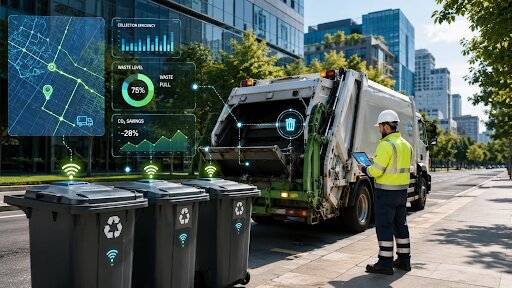
Smart sensors in waste bins have been implemented by many commercial places. They allow measuring the fill level of bins and sending updates about it. In case of faster-than-expected filling of any bin, necessary changes can be made in order to prevent problems. It is also possible to detect bins that are not filled yet to arrange unnecessary trips.
Another significant advantage is that thanks to AI it is possible to optimize routes used for collecting garbage. Instead of going through one and the same route each day, AI algorithms can calculate the optimal route depending on such factors as traffic conditions, priorities in collections, and locations requiring waste picking up. Consequently, drivers spend less time on the road, consume less fuel, and manage to complete additional collections per day.
Thanks to data analysis, it becomes clear how much waste particular business produces in particular situation. For instance, it might be expected that during the peak season a retailer produces more cardboard than during off-season. Construction projects are also characterized by fluctuations in waste volume in various stages of the process.
The use of technology allows improving interaction among office employees, drivers, and customers. When it is necessary to adjust schedules or inform about additional waste volumes, it becomes much easier.
In any case, the primary goal of technology is helping people and not replacing them. Experienced drivers, waste collection planners, and waste management team remain essential parts of the process.
What This Means for Businesses
These advancements frequently result in an enhanced experience altogether for business owners without them having to understand the workings behind the technologies.
More precise scheduling results in full bins being less likely to be overflowing and half-filled containers being left behind. The collection services offered are tailored to the business owner’s exact needs and do not include excessive charges for unwanted services.
Effective planning can also lower operational expenses for the waste collectors, and such advancements can prove beneficial to the clients too. Improved collection practices result in improved cleanliness in the workplace, increased safety, and minimal disruption of business activities.
Recycling becomes more efficient too since proper understanding of the pattern of waste enables business owners to sort recyclable items better and measure the extent to which they divert waste from landfills.
Businesses which cooperate with seasoned professionals offering innovative commercial waste management services are more likely to enjoy these continual advancements in technology.
Conclusion
AI and data are changing commercial waste collection in practical ways. Instead of relying only on fixed schedules, waste providers can make decisions based on real information, helping them deliver faster, more efficient, and more reliable services.
The technology is not about replacing people or making waste collection more complicated. It is about helping businesses and waste professionals work smarter together. As AI continues to improve, commercial waste collection is likely to become even more responsive, cost-effective, and environmentally responsible, making it an important part of how modern businesses operate.
Author Bio:
This is Aryan, I am a professional SEO Expert & Write for us blog and submit a guest post on different platforms – ReadsWrites provides a good opportunity for content writers to submit guest posts on our website. We frequently highlight and tend to showcase guests.